
An exhibition floor is a noisy place. Hundreds of brands competing for the same few seconds of attention, the same handshake, the same business card. The companies that walk away with real leads usually have one thing in common: their display stand was built with intent.
Custom display stands sit at the centre of that. Not the off-the-shelf shell scheme everyone gets handed at registration, but a custom-designed, quality-built piece of brand architecture that does the job. This piece walks through what goes into a great custom build, how to think about materials and design, what you should expect from an experienced builder, and where the return on your investment actually shows up. For a closer look at AEH’s full custom build capability across the country, you can also visit our Custom Displays Australia page.
Why Custom Display Stands Matter for Your Brand
Most exhibitors get one shot to make an impression at any given event. A shell scheme booth gives you walls and a sign, which is fine if your goal is just to be there. But if you’ve gone to the trouble of booking the floor space, briefing your team, printing collateral and travelling to a venue, you probably want more than just a stock standard display.
Custom display stands give you something a shell scheme can’t: control. Control over how visitors approach the space, where their eye lands first, how the product is shown, where conversations happen, and how the brand reads from twenty metres away versus two. That level of control is what turns a stand from a passive backdrop into a working sales environment.
For retail, the same logic applies in a different setting. A custom retail display stand built around a specific product range, in a specific store, with a specific shopper journey in mind, will outperform generic fixtures every time. The brand sits where it should. The product sits where it sells. Nothing is by accident.
Function Types for Custom Display Stands
There’s no single format that fits every business or every event. The right answer depends on how often you’re using the stand, what you’re showing, and how the brand needs to feel in the space.
Trade show and exhibitions
These are the big builds. Structures, hanging signage, AV integration, meeting rooms, demo or activation zones. Bespoke trade exhibition stands at major events like Land Forces, All Energy, Fine Food Australia, APP and ADX are where custom work earns its keep. The difference between a generic booth and a fully designed environment is the difference between a busy stand and a quiet one.
Multiple Exhibition Locations (portable and modular displays)
For brands that exhibit regularly across cities (one month in Sydney, the next in Melbourne, then Brisbane), portability matters. Modular custom display designs let you reconfigure the same components for different floor plans without losing brand consistency. The upfront investment is higher than a pop-up, but the cost per event drops sharply over time.
Promotion Events
Shorter lifespan, sharper purpose. Promotional stands built for product launches, sampling activations or roadshows are designed to attract attention fast and pack down clean. Often used alongside larger exhibition activity to extend a campaign into different environments.
What Goes Into Great Custom Display Designs
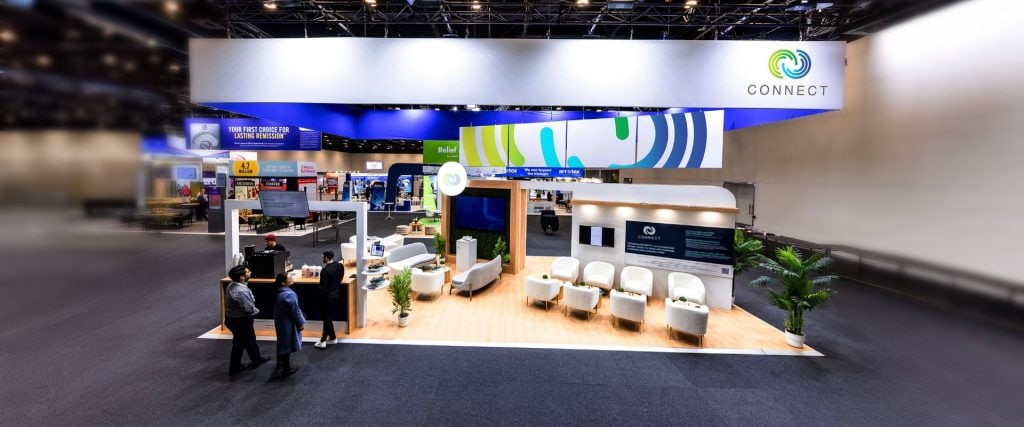
The brief is where every good stand starts. Not just ‘we need a 6×4 booth at this event’, but who you’re trying to reach, what you want them to do, what the brand needs to communicate, and what success looks like when you pack down on Sunday afternoon.
From there, an experienced design team gets to work for you. Industrial designers map out the structure. Project managers stress-test the timeline against venue bump-in windows and freight schedules. The 3D concept gets refined, signed off, and translated into technical build plans that the workshop can actually construct.
The best custom display designs share a few traits. The brand reads instantly from a distance. Lighting is treated as a design element, not an afterthought. There’s a clear path for visitors to enter, engage and exit without bottlenecks. Materials feel premium up close because they’re inspected up close. And every element earns its place. If a feature isn’t pulling visitors in or supporting a conversation, it shouldn’t be on the stand.
Materials and Craftsmanship – Building Stands That Last
A bespoke stand is only as good as what’s underneath the print. Quality materials and proper joinery are what separate a custom build from something that looks impressive on day one and tired by day three.
Most premium custom stands are built from a combination of structural timber framing, high-density board, fabric tension panels, acrylics and powder-coated metal. Each material is chosen for what it does well: timber and ply for structural elements that need to take repeated assembly, fabric for clean, large-format graphics, acrylic for product showcases, and metal for anything load-bearing.
Sustainability is changing the conversation here. Eco Board (a fully recyclable substrate) is increasingly standard for graphics and partition walls, and it performs as well as traditional MDF. AEH builds with Eco Board across a significant portion of its work and has been moving towards lower-waste production through its sustainability programme. For brands with their own ESG commitments, that material choice is no longer a nice-to-have.
Craftsmanship is the other half of the equation. In-house cabinet makers, shopfitters, and finishers (building, pre-assembling and quality-checking stands before they ever leave the warehouse) is what stops surprises on bump-in day. Outsourced production loses that oversight, and it shows.
Installation, Project Management and Australia-Wide Delivery
Designing the stand is one thing. Getting it onto a venue floor in Sydney, Melbourne, Brisbane, or Perth (on schedule, undamaged, and ready to open) is another job entirely.
This is where most of the unseen work happens. Coordinating freight, booking venue access, managing bump-in windows, briefing on-site crews, dealing with venue-specific compliance and Work Health and Safety requirements, and making sure every component arrives in the right order. Good project management means you turn up to a finished stand. Bad project management means you turn up to a phone call.
Experienced builders run this from a single point of contact. One project manager who knows your build, your timeline, and your event. They handle the venue liaison, the freight, the install crew, the dismantle, and the storage if components are being reused. For multi-event campaigns, continuity matters more than any individual creative decision.
The ROI of Investing in Custom Display Stands
Custom builds cost more up-front than rented shell schemes or off-the-shelf displays. The return shows up in a few different places.
The first is engagement. A well-designed stand pulls more visitors, holds them longer, and creates more meaningful conversations. More conversations mean more qualified leads, and more qualified leads mean a better cost per opportunity than a generic booth ever delivers.
The second is reusability. A modular custom stand designed properly can run for years across multiple events. Components get refreshed, graphics get reprinted, but the underlying structure keeps earning its keep. Spread the build cost across five or ten events, and the per-event cost drops below what you’d spend on a rented shell each time.
The third is brand recall. Visitors remember the stands that looked considered. They remember the brand attached to those stands. Months later, when a procurement decision lands on someone’s desk, that recall is what tips the shortlist.
This requires a build that’s been thought through properly, made from materials that hold up, and supported by a team that knows what they’re doing on event day.
Working with AEH on Your Next Custom Build
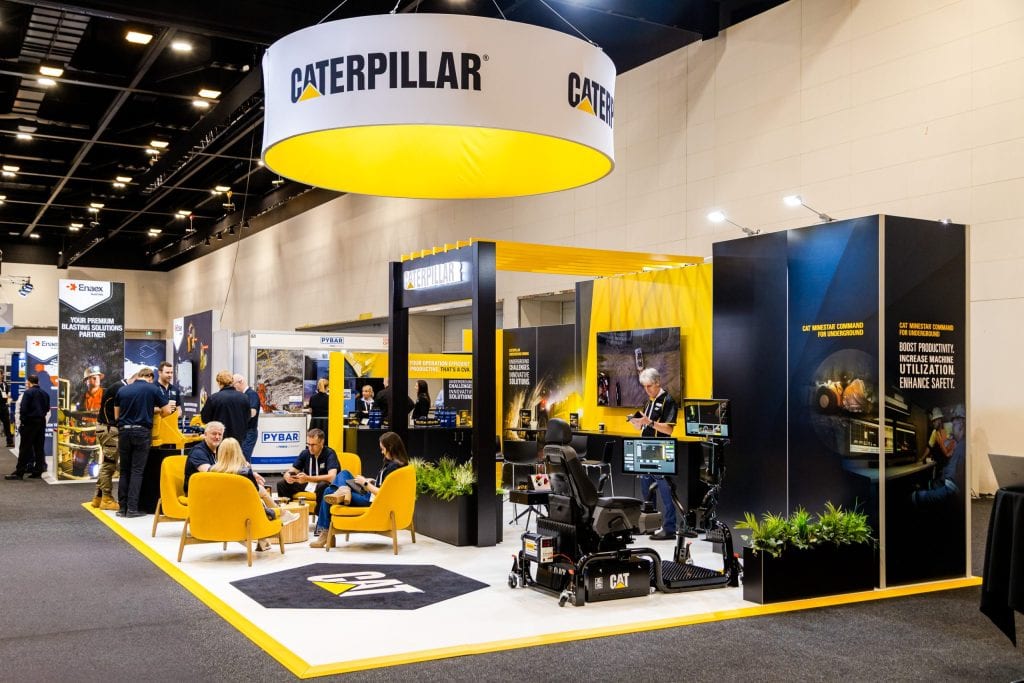
AEH has been designing and building custom exhibition stands, retail display solutions and full event display solutions for over thirty years, with work delivered for clients including Tourism Australia, Ministry of Japan, Hii, Caterpillar, LHD, Pfizer, Novartis, the European Union and the International Astronautical Congress. Production happens in-house from the Adelaide facility, with installation and dismantling crews operating across every state.
Membership of the International Federation of Exhibition and Event Services (IFES), the Australian Business Events Association (ABEA), and registration with JOSCAR puts AEH inside a network of vetted global suppliers and gives clients with defence or government procurement requirements the compliance trail they need.
Whether you’re planning a major bespoke trade exhibition stand for a national event, a permanent retail display fitout, or a series of custom promotional activations across multiple cities, the process starts the same way: a brief, a conversation, and a clear scope. From there, the design and build team takes it through to a stand that’s ready for the floor.
→ Talk to the AEH custom display team about your next project
Frequently Asked Questions
How long does it take to design and build a custom display stand?
For a major build, allow six months from first conversation to event day. Sign-off on the final design is required twelve weeks before delivery, with technical build plans issued to production at least eight weeks out. Smaller or simpler stands can run on shorter timelines, but rushing the process tends to cost more in revisions and overtime than it saves.
Can you reuse a custom display stand across multiple events?
Yes – and most of the better-built stands are designed with reuse in mind. Modular construction lets components be reconfigured for different floor plans, and graphics can be reprinted between events to refresh the look without rebuilding the structure.
What sustainability options are available?
Eco Board substrate, recyclable graphics, reusable structural components and waste minimisation on bump-out are all standard options. AEH’s sustainability work has been recognised on projects like evokeAG, where 95% of building and signage materials were reused or recycled.
Do you handle installation across Australia?
Yes. Stands are delivered, installed and dismantled at venues across every Australian state and territory, with project managers coordinating freight, venue liaison and on-site crews. International project support is available through the IFES partner network.
Ready to talk about your next stand?
Contact the AEH team for a no-pressure conversation about your goals, or request a quote to get started.