
How To Market Your Business With Custom Displays
- Exhibitions put you in front of buyers who can approve a purchase.
- A lead met face-to-face on the floor usually takes fewer follow-ups to close than one worked through calls alone.
- A standard stand gives every exhibitor the same shape to work with, so your brand has less room to differentiate.
- A custom display stand is designed around your products, your sightlines and the conversation you want.
- Build it as an asset you reuse across a year of shows, not a cost you carry once.
Most marketing spend buys a chance at attention. A paid ad buys a scroll past. An email buys two seconds in a preview pane. A billboard buys a glance from a moving car.
An exhibition buys something different. The person standing in front of you has taken a day out of their working week, travelled to a venue and walked a floor specifically to look at what companies like yours do. They are not distracted by something better. They came for this.
Marketing has an attention problem, while exhibitions do not
Exhibition audiences are self-selected. People attend a trade show as part of their job, usually holding or influencing a budget, and they walk the floor specifically to see what suppliers in your category are doing. That is a very different starting point from any channel where you are interrupting someone who came for something else. It is also why the cost of a conversation on a show floor compares well with the cost of getting in front of the same person any other way.
So the question is not whether exhibitions work. It is what you put on the floor once you have paid for the space.
The mistake most exhibitors make with their floor space
The pattern we watch play out at show after show is a business spending months negotiating floor space, briefing a graphic designer to produce a pull-up banner and a backwall print, then turning up to a standard stand that is the same square or rectangle as most of the stands around it.
The marketing budget went into the space, almost none of it went into the thing occupying it.
Visitors decide which stands to approach well before your headline is readable. What they are reading from down the aisle is shape, height, lighting and whether the stand looks like somewhere a conversation happens or somewhere a salesperson pounces. If your structure is identical to everyone else’s, your brand is doing very little until someone is already standing in front of you, and plenty of people never get that far.
That is where a custom build earns its place. Not because custom looks nicer, but because a standard structure hands your single biggest differentiator, your brand, back to the organiser.
What changes when you switch to a custom display stand
 A custom display stand is designed and manufactured for one brand and one floor space. In practice, that means five things you cannot buy off a shelf.
Sightlines that pull people in from the aisle
Height, overhead signage and open corners are all design decisions. A stand can be drawn to be visible from the far end of a hall, or to feel open enough that a hesitant visitor will step in rather than hover at the edge. Standard stands make that decision for you, and they make it the same way for everyone.
Product display built for your product
If you sell something heavy, something tiny, something that needs power, or something that needs to be touched, the joinery can be built for it. We have designed and built stands with walk-through product exploration areas, fun product activations, recessed product walls, demonstration benches, lit display cases, platforms to view your machinery and full working machinery bays. None of that comes out of a catalogue.
Lighting where you want people looking
Exhibition hall lighting is usually flat and unflattering. Lighting designed into the stand controls what the eye goes to first. It is one of the simplest elements of a build and one of the most effective at directing attention.
A layout that holds the conversation
Where the counter sits, where storage goes, whether there is somewhere to sit down with a serious buyer. A stand that gives your team a place to have a fifteen-minute conversation converts differently to one where every discussion happens standing in an aisle with a queue forming behind.
An asset instead of an expense
This is the part finance teams care about. Design is paid for once. The structure is then reconfigured for different floor sizes across your next three or six shows, with graphics reprinted for whatever campaign is running. Across a year or two of exhibiting, the cost per show falls every time you use it.
How to attract customers at an exhibition
The stand does the first job. Your team does the rest. A few things consistently separate the exhibitors who leave with a pipeline from the ones who leave with a bowl of business cards.
- Decide what one thing the stand is for. Launching a product, booking demos, recruiting distributors. A stand designed around one objective outperforms a stand that hedges across three.
- Give people a reason to stop that is not a lolly jar. A live demonstration, a machine running, something being made. Movement stops people. A printed wall does not.
- Staff it properly. Two people who know the product beat five who know the brochure. Nobody approaches a stand where everyone is looking at their phone.
- Capture leads the same way every time. One method, one form, agreed before the doors open. Follow up within 48 hours while the conversation is still fresh.
- Plan the whole year, not the one show. Design the stand so it works at 3m by 3m and at 6m by 6m, and the second show costs a fraction of the first.
Where to start
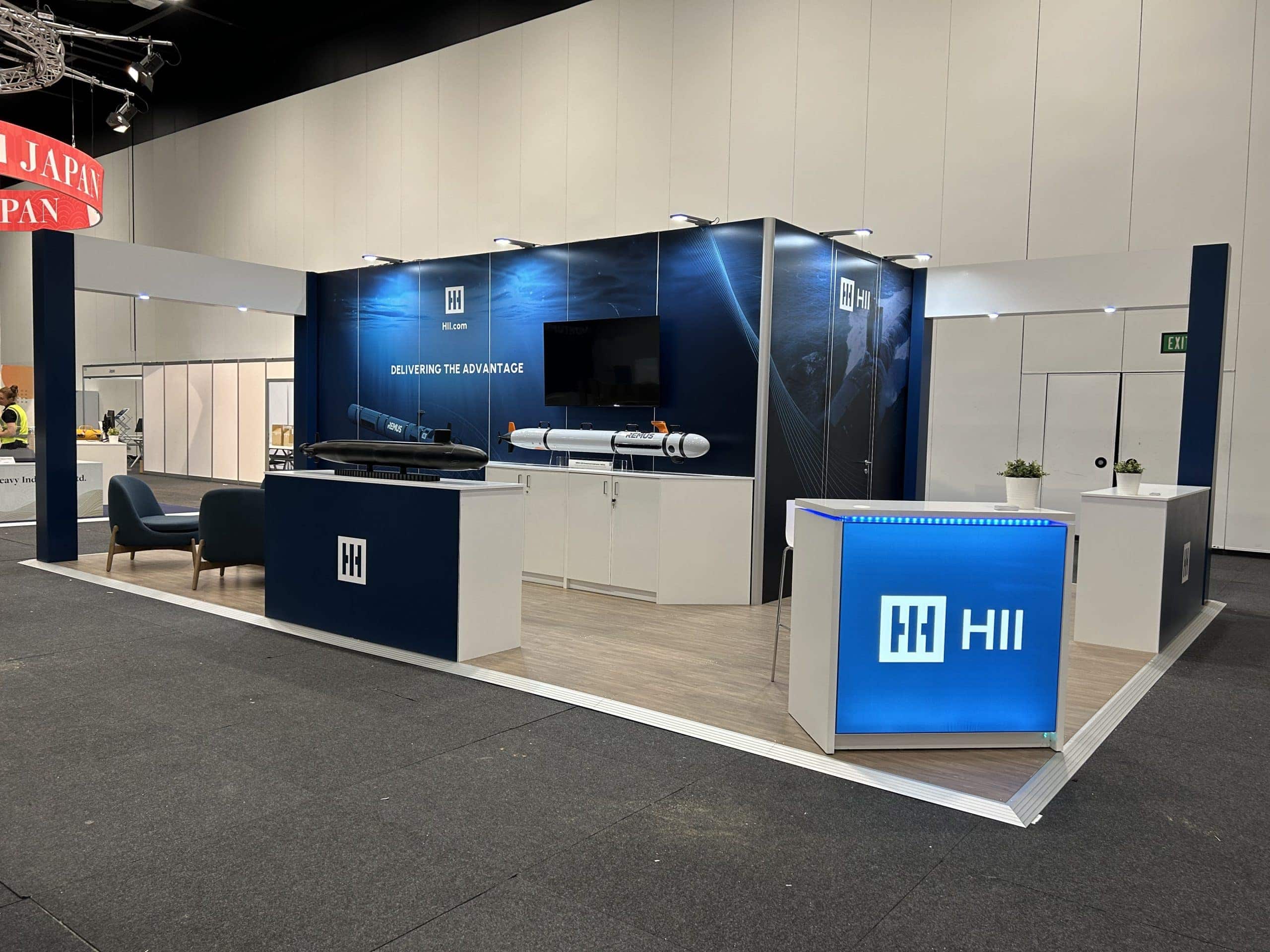
Work backwards from the floor space you have already booked. Send us the show, your stand number and the dimensions, and tell us what a good result looks like. Our designers draw the stand into your space so you can see it before you commit to it, and we manufacture it in our own warehouse facility before installing it at shows in Adelaide, Sydney, Melbourne, Brisbane, Perth, Cairns and the Gold Coast.
If you are weighing exhibitions against another channel this year, the honest comparison is not the cost of the stand against the cost of a campaign. It is the cost per conversation with someone who can sign.
More detail on our approach sits on the Custom Display Stands Australia page.
Frequently Asked Questions
Is exhibiting still worth it compared with digital marketing?
The two are not really competing. Digital marketing reaches people cheaply at the top of the funnel. Exhibitions put you in a room with people who are there as part of their job and who generally hold or influence a budget. The realistic comparison is cost per conversation with a decision maker, and on that measure exhibitions hold up well.
How early should we start designing an exhibition stand?
Start the conversation around six months before the show, with design sign-off due about three months out. That window covers design approval, manufacture, pre-assembly and freight. Starting early buys you design time rather than production time, which is where the good ideas come from. If your show is sooner than that, call AEH, and we will tell you what is achievable in the time available.
What makes visitors stop at one stand and not another?
Structure, height, lighting and openness do the work well before any copy is readable. Movement helps, as a live demonstration or something being made will stop people that a printed wall will not. Staffing matters just as much. Two people who know the product and are looking outward beat a row of staff on their phones.
Can one custom stand be used at different shows?
Yes, if it is designed that way from the start. We build custom stands to be reconfigured across different floor sizes, then store the components between events. Graphics are reprinted for each campaign while the structure stays. Tell us your show calendar at the brief stage, and we will design for the full year.
What should we measure after an exhibition?
Conversations with decision makers, qualified leads, demos booked and how many progressed within 60 days. Count visitors if you like, but foot traffic is a vanity number. Agree the measures before the show, capture leads the same way across the team, and review the result against the stand design so the next build improves on it.
Planning your next exhibition?
Talk to AEH about a custom display stand built for your next show.
Enquire now or call AEH today.
About the Author
AEH has been designing, building and installing exhibition and custom display stands for more than 30 years, and has been inducted three times into the Meetings and Events Australia Hall of Fame.
We manufacture in our own warehouse facility, which keeps quality control and build schedules in our hands, and we hold memberships with the International Federation of Exhibition and Event Services and the Australian Business Events Association, along with JOSCAR registration. Our designers, cabinet makers, shopfitters, signage technicians and project managers work as one team, so the people who design your stand are the people who manufacture it, apply the signage and install it at the venue.